

¿Quiénes son los Wayuu?
Los Wayuu (o Woumain, como se llaman a sí mismos) son el grupo indígena más grande de Colombia y Venezuela. Viven en toda la península de La Guajira en pequeñas comunidades familiares llamadas rancherías, organizadas según un sistema matrilineal.
Su cultura está marcada por:
-el matriarcado
-los fuertes lazos familiares
-la conexión con el desierto y el mar
-el respeto profundo hacia los mayores
-la tradición oral
-el arte textil vibrante
La mayoría de los Wayuu aún hablan wayuunaiki, su lengua ancestral, utilizada en la vida cotidiana, la educación y los rituales.
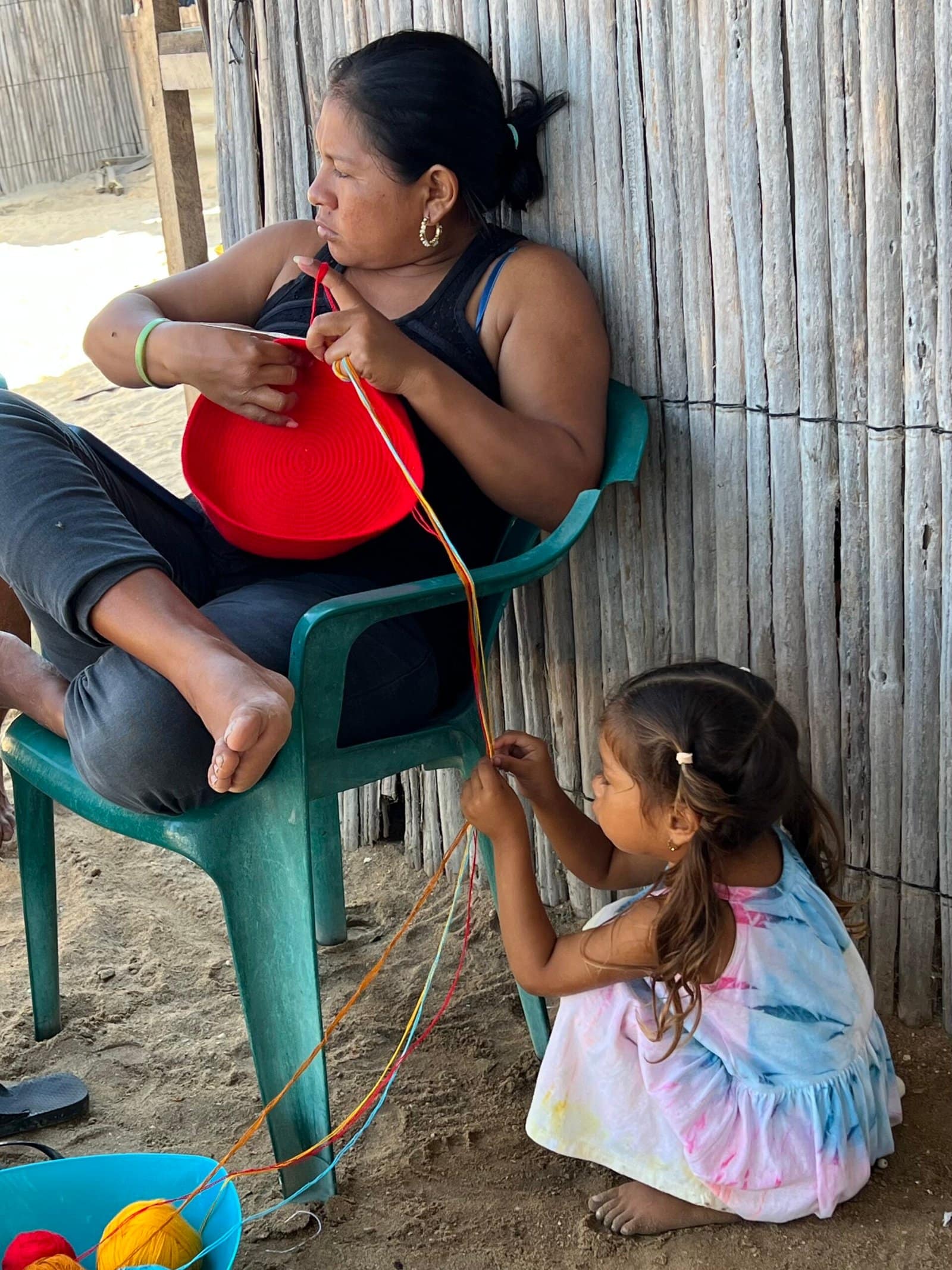
Arte & Artesanía: El Significado de los Textiles Wayuu
Los textiles Wayuu no son simples “artesanías”; son un lenguaje visual.
Cada diseño (kanaas) tiene un significado que representa:
-las dunas del desierto
-los caminos del viento
-animales
-historias familiares
-símbolos transmitidos por generaciones
Las piezas más representativas son:
Mochilas Wayuu
Tejidas a mano en un proceso que puede durar de 10 a 20 días. Cada mochila es completamente única.
Chinchorros
El textil más preciado de la cultura Wayuu. Hacer un chinchorro puede tomar 2–6 meses, y simboliza amor, paciencia y tradición familiar.
Fajas y accesorios
Cinturones, tiras y pulseras coloridas que a menudo representan la identidad del clan.
Comprar directamente a las mujeres Wayuu apoya a sus familias y preserva su herencia cultural.
Tradiciones & Cosmovisión
Yonna — La Danza Tradicional
Una danza ceremonial con movimientos circulares que simbolizan Una danza ceremonial con movimientos circulares que simbolizan armonía, fuerza y el respeto por los ancestros.
Los Sueños como Guía
Los sueños (ja’pia) tienen un papel importante en la toma de decisiones.
Para los Wayuu, los sueños son mensajes del mundo espiritual.
La Importancia del Viento
El viento (jaa’in) es una fuerza viva dentro de la cosmovisión Wayuu.
Curiosamente, es el mismo viento que atrae a los kitesurfistas de todo el mundo.
La Vida en el Desierto
La Guajira es un entorno desafiante, pero los Wayuu han vivido aquí durante siglos gracias a:
-su profundo conocimiento de las fuentes de agua
-su movilidad estacional
-la cría de chivos
-la pesca
-el tejido y la artesanía
Su resiliencia es una de las cualidades más inspiradoras de su cultura.
Turismo Responsable — Cómo Relacionarte con Respeto
Cuando visites territorios Wayuu, recuerda:
- Pregunta antes de tomar fotografías
-Apoya guías locales, artesanas y alojamientos familiares
-Respeta la propiedad privada y las rancherías
-No regatees de manera agresiva — el tejido requiere tiempo
-Aprende algunas palabras en wayuunaiki (por ejemplo: asajaa = hola, ainjaa = gracias)
Tu respeto ayuda a fortalecer a la comunidad y enriquece tu experiencia.
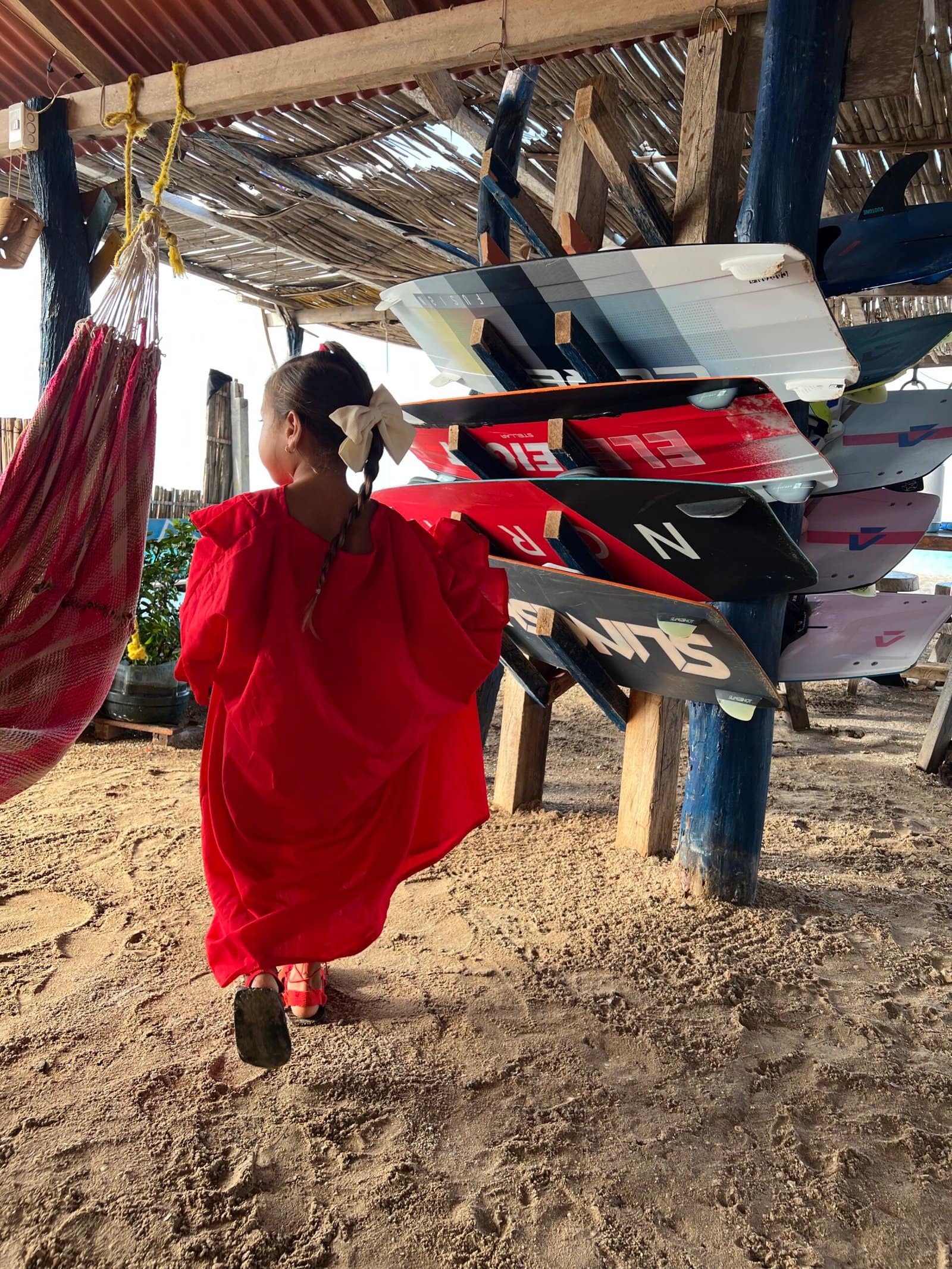
Qué Significa la Cultura Wayuu para Paradise Kite Cabo
Nuestra escuela fue fundada por instructores Wayuu que crecieron en Cabo de la Vela.
Para nosotros, la cultura Wayuu no es un atractivo turístico — es nuestro hogar, nuestra identidad y nuestra historia.
Al compartir nuestras tradiciones, buscamos:
-ofrecer a los visitantes una comprensión más profunda de La Guajira
-apoyar a las familias y artesanas locales
-preservar nuestras raíces mientras damos la bienvenida al mundo
Si tienes curiosidad por aprender más, estaremos encantados de compartir historias, historia y recomendaciones locales durante tu estadía.
La cultura Wayuu es uno de los aspectos más valiosos de La Guajira. Desde sus textiles hasta su cosmovisión, desde su lengua hasta su relación con la naturaleza, los Wayuu mantienen viva una herencia que hace de Cabo de la Vela un lugar verdaderamente especial. Cuando visites, tómate un momento para observar, conectar y apreciar — porque entender a los Wayuu es entender el alma de esta tierra.